
Weak Stream or Hesitancy? A DIY Flow Check (Safely) at Home
Understanding what a weak urine stream indicates and how to safely assess your flow strength at home.
6 min read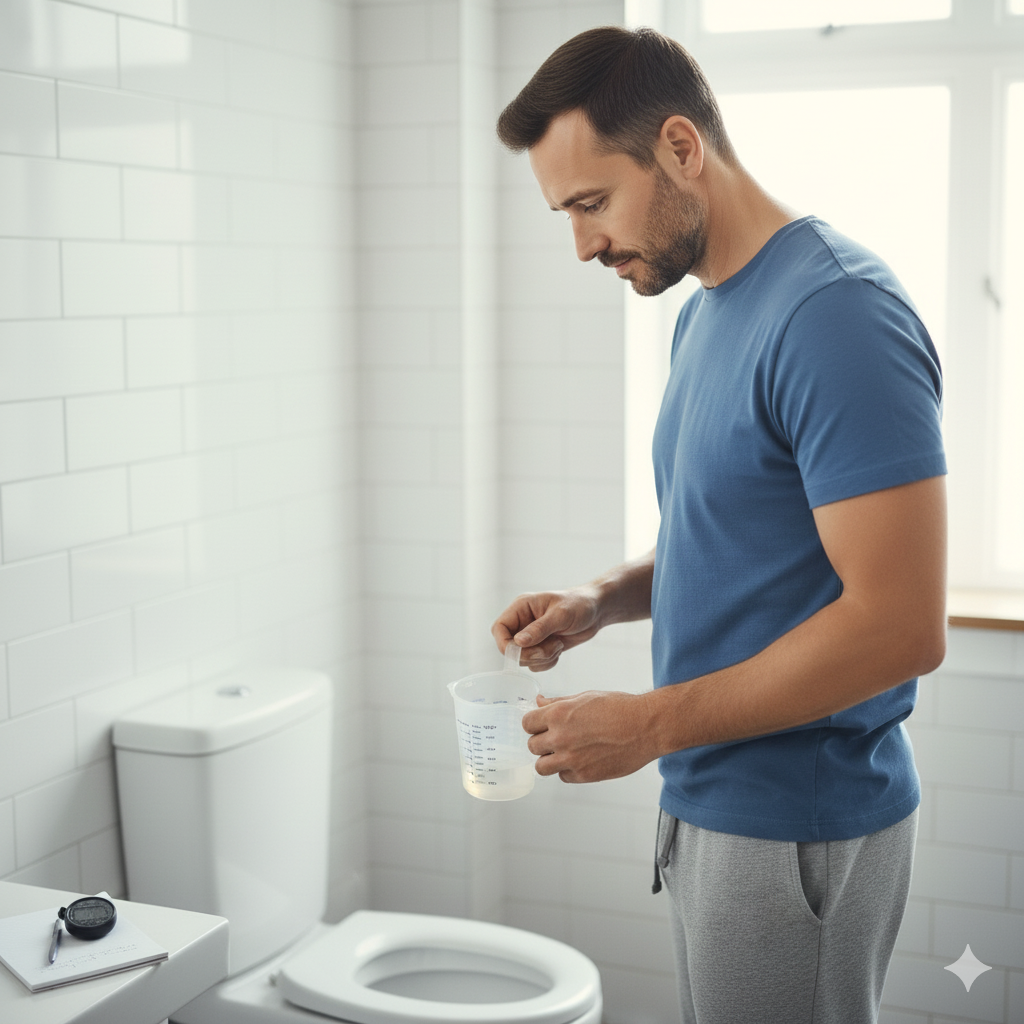
Changes in urine flow strength often develop gradually, making them easy to overlook. Yet a weakening stream can signal important health changes, particularly in men as they age. Understanding how to assess your flow and when to seek advice helps maintain urinary health.
What Weak Flow Points To
A gradually weakening stream, start-stop flow, or straining to urinate often reflects bladder outlet obstruction. In men, the most common cause is benign prostatic hyperplasia (BPH) - natural prostate enlargement that affects over half of men by age 60.
While BPH itself isn't dangerous, untreated obstruction can lead to:
- Urinary retention (inability to empty fully)
- Recurring infections
- Bladder damage from overwork
- In rare cases, kidney problems from back-pressure
Other possible causes include urethral stricture (narrowing), bladder muscle weakness, or nerve issues affecting bladder control.
Recognising Flow Problems
Visual and Sensory Clues Men often notice practical changes:
- Stream doesn't travel as far as before
- Flow falls straight down rather than projecting
- Urine sprays or splits into multiple streams
- Takes noticeably longer to empty bladder
- Need to push or strain to start
- Flow stops and starts rather than steady stream
Time as an Indicator If you're taking significantly longer to urinate than you used to, especially with a full bladder, this suggests reduced flow. What once took 30 seconds might now take a minute or more.
DIY Flow Assessment
While medical flow tests provide precise measurements, you can estimate your flow strength at home:
The Timing Method
- Ensure you have a comfortably full bladder (not desperate, but ready to go)
- Time from when flow starts to when it completely stops
- Optionally, urinate into a measuring jug to check volume
Understanding Your Results
- Normal flow: Empties 300-400ml in 20-30 seconds
- Borderline slow: Takes 30-45 seconds for the same amount
- Significantly reduced: Over 60 seconds for a normal void
Average flow rates:
- Healthy adult: 15-25 ml/second
- Mildly reduced: 10-15 ml/second
- Significantly reduced: Under 10 ml/second
Simple Calculation If you measure 300ml taking 30 seconds to void: 300ml ÷ 30 seconds = 10ml/second (borderline slow)
Quality Indicators Beyond Speed
Flow Pattern Normal urination follows a bell curve: starts gradually, reaches steady peak flow, then tapers off smoothly. Abnormal patterns include:
- Intermittent: Multiple stops and starts
- Straining: Pushing required throughout
- Terminal dribbling: Prolonged dribble at the end
- Hesitancy: Long delay before flow starts
The "Morning Test" First morning urination often provides the best assessment as your bladder is naturally full. If even morning flow is weak, this strongly suggests obstruction.
When to Seek Professional Assessment
Consider medical evaluation if you experience:
- Consistent flow under 10ml/second (taking over a minute to empty)
- Progressive worsening over weeks or months
- Straining becoming necessary for urination
- Feeling of incomplete emptying
- Recurring UTIs
- Any episode of complete inability to urinate (emergency)
What to Expect from Medical Testing
Uroflowmetry A simple, non-invasive test where you urinate into a special funnel that measures flow rate, volume, and pattern. Results appear as a graph showing your flow curve.
Post-Void Residual Ultrasound checks how much urine remains after you've finished. Normal is less than 50ml; over 200ml suggests significant obstruction.
Improving Flow Naturally
While medical treatment may be needed for significant obstruction, these wellness strategies can help:
Bladder Health Habits
- Don't delay urination when you feel the urge
- Take your time and don't rush
- Try double voiding (wait 30 seconds, then try again)
- Maintain good hydration for optimal bladder function
Positioning Tips
- Sit down if standing is difficult
- Lean slightly forward
- Ensure privacy and relaxation
- Some find running water sounds helpful
Treatments That Work
If lifestyle measures aren't enough, effective medical options include:
- Alpha-blockers to relax prostate muscle
- 5-alpha reductase inhibitors to shrink prostate
- Minimally invasive procedures for significant obstruction
The key is not to suffer in silence. Many men assume weak flow is "just ageing," but treatment can dramatically improve quality of life.